


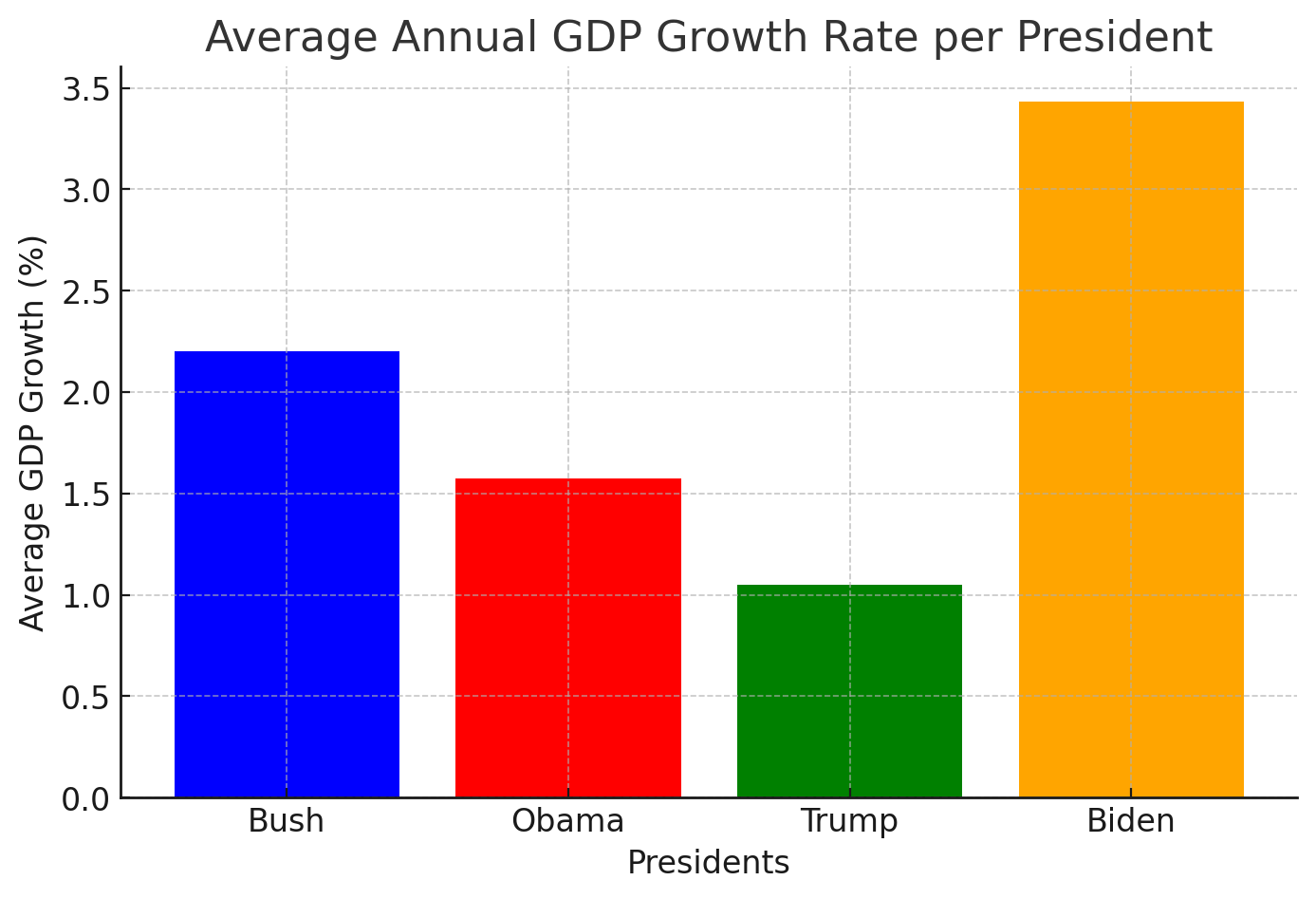
The average annual GDP growth rates for each president:
George W. Bush: 2.2%
Barack Obama: 1.6%
Donald Trump: 1.05%
Joe Biden: 3.43% (based on available data through 2023)
These averages capture the peaks and troughs of economic activity under each administration, reflecting recessions, recoveries, and unique challenges encountered along the way. However, GDP alone only tells part of the story.
GDP: A Limited Measure of Presidential Success
While GDP is a valuable indicator of economic activity, it has notable limitations when assessing broader success. In isolation, GDP can obscure the deeper aspects of a nation’s progress, such as the quality and sustainability of growth, inflation, the distribution of wealth, and overall societal well-being. It’s just one piece of the puzzle. To gauge a country’s true progress, a more nuanced approach—including social, environmental, and equity considerations—is essential.
Context Matters in Economic Data
Each presidency’s economic growth rate is influenced by unique circumstances and policies as well as the broader global economy. These figures, derived from the Bureau of Economic Analysis (BEA), offer insight but not the full picture.
2020’s Economic Shock: The COVID-19 pandemic led to a sharp GDP contraction, affecting all aspects of the economy and necessitating unprecedented recovery measures.
2021 Rebound: Under Biden, the economy rebounded significantly as restrictions lifted and stimulus efforts took effect, contributing to the year’s impressive growth rate.
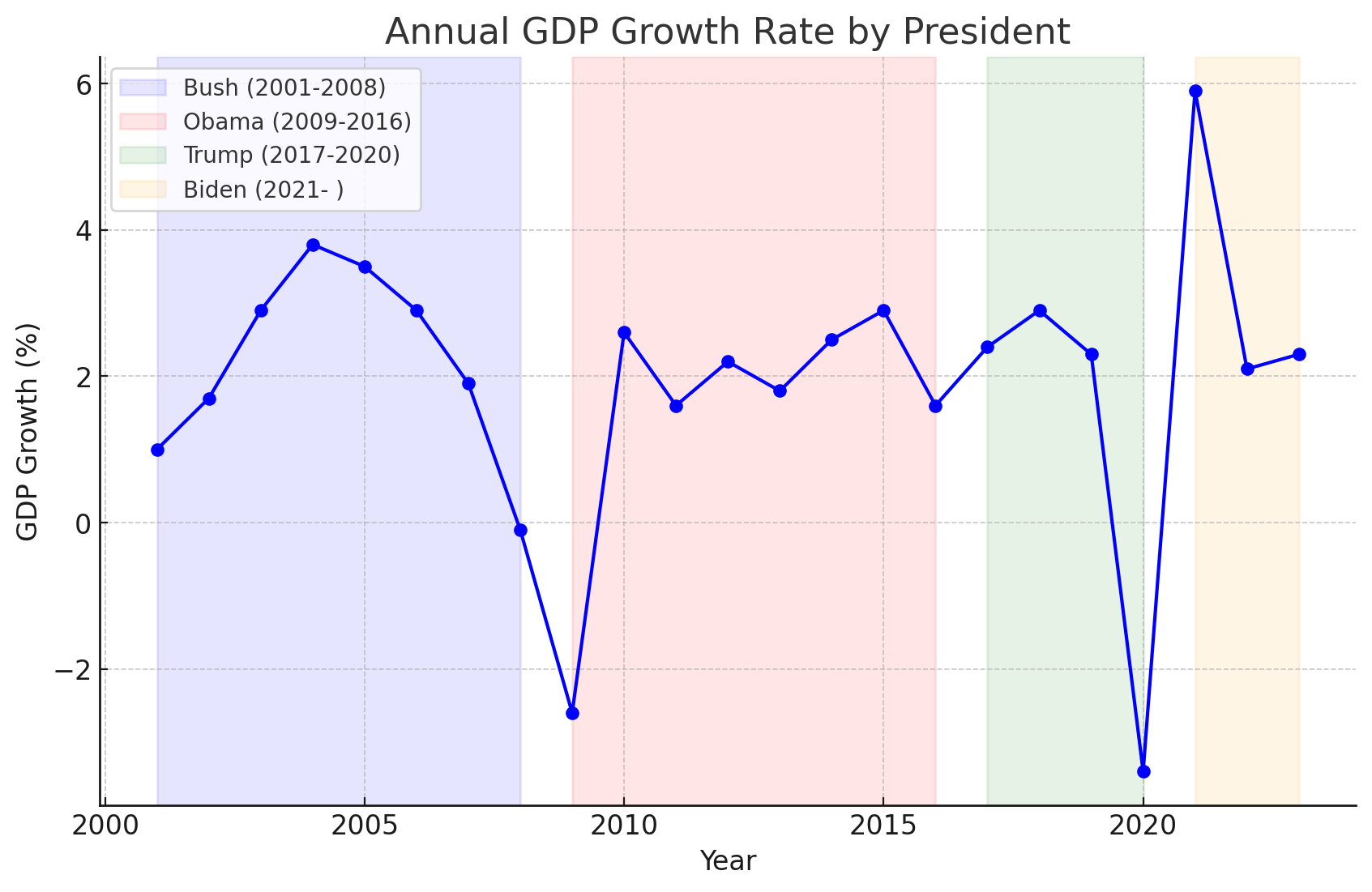
While these GDP averages provide insight, understanding a president’s economic impact requires looking beyond numbers to the broader implications of policy and the effectiveness of crisis management.
GDP Growth vs. Lived Economic Experience
Disconnect from Personal Reality: GDP growth represents overall economic activity but may not align with individual experiences. For instance, a president could preside over strong GDP growth, yet income inequality, job insecurity, or cost-of-living challenges might leave many voters dissatisfied if their personal economic realities don’t match national trends.
The Influence of Broader Economic Indicators
What Voters Care About: Many voters respond more to indicators like unemployment, inflation, immigration, law and social issues, and wage growth than to GDP figures. Rising inflation or stagnant wages can drive voters to seek change, regardless of GDP growth. Personal finance issues, like job security or rising costs, often impact voting behavior more directly than broad economic metrics.
The Power of Short-Term Economic Memory
Recency Effect: Voters often focus on recent economic conditions when casting their ballots, particularly the year or two before an election. Presidents may be credited or blamed for short-term economic trends—sometimes driven by factors beyond their control (like oil prices or global economic shifts).
Perceptions of Stability and Crisis Response
Crisis Management Matters: Voters might judge presidents more on how they handle crises than on long-term GDP averages. Effective crisis management (e.g., during recessions or pandemics) can build voter confidence. For example, Bush’s response to the 2001 recession, Obama’s actions during the 2008 financial crisis, and Trump and Biden’s handling of the COVID-19 economic fallout all shaped voter perceptions, sometimes more than overall GDP growth.
Economic Growth vs. Ideological Alignment
Values Over Numbers: Voting decisions are heavily influenced by ideological preferences, which can outweigh economic data. Voters might prioritize issues like healthcare, climate policy, or social justice over GDP growth if they feel one candidate aligns better with their values.
GDP Growth and Party Reputation
Party Expectations: Some voters associate economic growth with specific parties (e.g., Republicans with business growth and tax cuts, Democrats with social programs and healthcare). This can lead voters to favor candidates from a particular party based on anticipated policies, regardless of actual GDP performance.
Conclusion: Beyond GDP in the Voter’s Mind
GDP growth provides a snapshot of economic activity but does not capture the full spectrum of factors that influence voter choice. While high GDP growth might signal a “successful” administration, it often fails to account for personal economic realities, crisis response, and the values that shape voters’ choices. Economic health is important, but in the voting booth, many Americans weigh a more complex mix of recent experiences, values, and personal finance issues.
In the end, GDP growth might influence some voters, but it’s rarely the sole or decisive factor. Economic and social well-being, perceived stability, and ideological alignment often shape the final choice, proving that voter behavior extends far beyond GDP alone.