


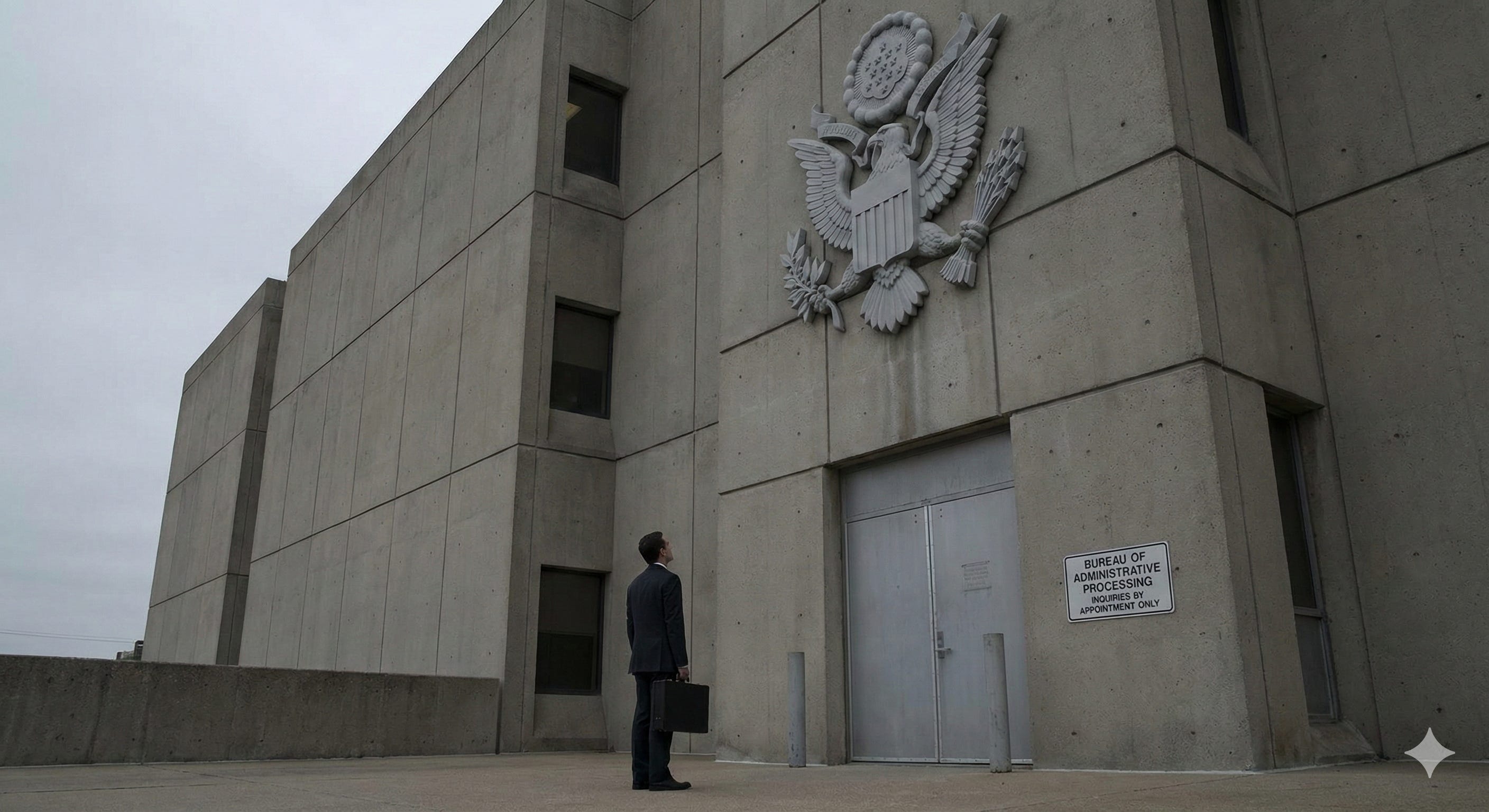
This is not a story about professional discipline, but about structural design and accountability — and what happens when rules outlive responsiveness.
People hire immigration lawyers for the same reason they hire any lawyer: to solve problems.
They assume — reasonably — that if they follow the rules, submit the documents, and retain competent counsel, the system will respond. Not always favorably, perhaps, but at least coherently. They assume deadlines matter. That process leads somewhere. That professional advocacy has weight.
Immigration lawyers internalize that expectation just as deeply. The field is dense, technical, and unforgiving. Precision matters. Preparation matters. Experience matters. Few areas of law demand as much procedural discipline.
And yet, immigration practice today exposes a painful contradiction at the heart of modern lawyering: even the most structured legal systems can become functionally unresponsive.
A system built on rules — and fragmentation
On paper, the U.S. immigration system is one of the most rule-bound bureaucracies in existence. Statutes are detailed. Regulations are exhaustive. Forms are standardized. Every step has a reference number, a filing instruction, and a published procedure.
But that appearance of order masks a deeper fragmentation.
Authority is divided among multiple agencies with overlapping but incomplete control: USCIS, the Department of State, the National Visa Center, consular posts abroad. Key functions are outsourced to private contractors who operate portals, schedule appointments, and generate “responses” without substantive authority.
Each component follows its own logic. None controls the whole.
For the lawyer, this creates a paradox: the law is clear, but the system is deaf.
When legal skill loses leverage
Traditional lawyering assumes that competence creates leverage. If a case is delayed, you inquire. If it is mishandled, you escalate. If it is denied, you appeal. Someone, somewhere, is accountable for a decision.
In immigration, that assumption increasingly fails.
Lawyers encounter locked portals with no human contact. Automated responses that close tickets without action. Instructions to “reschedule” without any mechanism to do so. Silence that persists not for days, but for months. Each agency points elsewhere. Each contractor disclaims authority.
The lawyer is left with perfect compliance and no response.
At that point, the problem is no longer legal. It is bureaucratic — and no amount of legal reasoning can force a system to acknowledge its own malfunction.
The ethical bind immigration lawyers know too well
When law fails to produce response, the practitioner ceases to argue with statutes and begins to negotiate with silence. This is where the real strain emerges.
Clients expect solutions. They are not wrong to do so. Their lives, families, and futures are on hold. They hired counsel precisely so they would not have to navigate this maze alone.
The lawyer, meanwhile, knows the truth: the file is complete, the law is satisfied, and nothing more can be submitted — yet nothing moves.
Another composite example illustrates the bind. A lawyer spends weeks monitoring an unresponsive case, sending carefully timed inquiries, escalating through every available channel. Each response is polite, procedural, and empty. The client asks, repeatedly, “What else can we do?” The honest answer is: nothing. But saying that outright feels like a professional surrender.
Walking away feels unethical. Persisting feels performative. Billing for time spent chasing silence feels wrong. Absorbing the cost indefinitely feels unsustainable.
This is not a failure of effort or expertise. It is moral injury — the strain that arises when professionals are unable to act in accordance with their ethical commitments because the system denies them the ability to act meaningfully at all.
The invisible work of containment
What often goes unseen is that immigration lawyers are still working during these periods — just not in ways that produce measurable progress.
They are:
Monitoring unresponsive systems
Deciding when not to escalate because escalation is meaningless
Translating bureaucratic inertia into reassurance clients can live with
Shielding clients from the psychological toll of uncertainty
This work is essential, but it is invisible. It does not appear in approval notices or processing times. It is rarely compensated, especially under flat-fee arrangements built on the now-obsolete assumption of a rational system.
And yet, lawyers continue to do it — not because contracts require it, but because professionalism does.
When Structural Failure Becomes Economic Reality
The strain imposed by an unresponsive immigration system is not only ethical or psychological. It is increasingly economic.
In recent months, many experienced immigration attorneys have reported—often in professional forums and private exchanges—that their practices have contracted sharply, in some cases by as much as seventy percent over a short period of time. These accounts share a common feature: there are no allegations of misconduct, no disciplinary issues, and no erosion of professional competence or reputation. Instead, the decline follows sudden shifts in policy, enforcement posture, and administrative processing that have dramatically reduced intake while stalling existing matters.
Faced with a rapidly constricting income environment, attorneys are reassessing the sustainability of remaining solely within immigration practice. Some are exploring work in family court, assigned criminal defense, or other adjacent areas—not as a matter of preference or professional reinvention, but as a necessary adaptation to conditions beyond their control. These are not departures driven by disinterest in immigration law, but by the practical demands of maintaining a viable practice and meeting family obligations.
This pattern is not unusual. It is simply rarely stated so plainly.
What these accounts illustrate is that the same structural forces that immobilize individual cases also destabilize entire practices. A system that is opaque, slow, and fragmented does not merely frustrate lawyers; it erodes the economic foundations that allow conscientious legal practice to exist at all. When outcomes become untethered from effort, and volume becomes untethered from planning, professionalism alone cannot sustain a practice indefinitely.
The result is a quiet sorting effect within the profession. Lawyers who prioritize deliberation, ethics, and careful client representation either absorb unsustainable costs, narrow their exposure to the most volatile segments of the system, or leave the field altogether. Others adapt by shifting toward high-volume models or adjacent practice areas—not because they prefer to, but because the system increasingly rewards survival over specialization.
The Cost of Attrition to the Profession and the Public
What is often missed in these discussions is what is lost when experienced attorneys quietly abandon a field—not through failure or disinterest, but through structural exhaustion.
Immigration law is not easily replaceable expertise. It is cumulative, experiential, and deeply procedural, developed through years of navigating complex statutes, shifting policies, agency practices, and informal institutional norms that are rarely captured fully in regulations or guidance. When attorneys with this knowledge exit the field, that expertise does not transfer cleanly to the next generation. It dissipates.
The loss is not confined to individual practices. It weakens the profession itself. Fewer experienced practitioners means diminished institutional memory, weaker informal accountability, and reduced capacity to identify systemic failures when they arise. It also shrinks the pool of lawyers capable of mentoring younger attorneys, shaping best practices, or contributing meaningfully to reform grounded in lived experience rather than abstraction.
There is also a direct cost to the public. Clients navigating an already complex system face fewer seasoned advocates and are more likely to encounter representation stretched thin, overly routinized, or oriented toward volume rather than judgment. Over time, this dynamic risks transforming a field that depends on precision and care into one governed primarily by survival economics.
Seen in this light, the departure of conscientious immigration attorneys is not a private career choice or an individual failing. It is a structural loss—one that weakens the profession’s capacity to serve clients, uphold standards, and sustain the rule of law within a system already strained by its own complexity.
Why the profession struggles to name this
Immigration lawyers rarely talk publicly about this dynamic. The reasons are understandable.
Admitting that the system cannot be influenced feels like admitting professional weakness. Clients may interpret honesty as excuse-making. Colleagues may assume incompetence rather than structural failure. Institutions face no incentive to acknowledge dysfunction.
So the silence persists. Each lawyer absorbs the frustration privately. Each client assumes delay must mean something was done wrong. And the system continues unchanged.
The illusion of control
The immigration system is particularly damaging because it looks orderly. Status updates appear. Emails are sent. Tickets are “resolved.” From the outside, the machinery seems active.
But activity is not responsiveness.
A system that generates automated replies while preventing human intervention is not neutral. It is hostile. And when lawyers are judged by outcomes inside such systems, professionalism itself becomes distorted — measured not by judgment or ethics, but by whether a locked door eventually opens.
A distinction the profession must confront
The immigration bar, and the legal profession more broadly, must confront an uncomfortable distinction:
There is a difference between legal advocacy and navigating institutional paralysis.
The first is the practice of law. The second is crisis containment. Both require skill, but only one responds to traditional measures of competence.
Until that distinction is acknowledged, lawyers will continue to internalize failures that are not theirs, and clients will continue to expect results that no professional can guarantee.
The question beneath the frustration
This leads to a deeper question — one many lawyers feel but hesitate to articulate:
If a system is so fragmented that it cannot hear professional advocacy, what does ethical lawyering require?
Is it endless persistence? Quiet absorption of cost? Or honest acknowledgment of limits?
The answer is not to abandon clients or lower standards. It is to stop pretending that professionalism alone can compensate for broken administrative design.
Naming the pressure honestly
Immigration is under extraordinary strain — politically, administratively, and emotionally. No serious practitioner denies this. But strain does not excuse opacity, nor does complexity justify silence.
Lawyers cannot fix these systems individually. But they can refuse to normalize dysfunction by internalizing it as personal failure.
Not every delay is incompetence.
Not every stuck case is neglect.
Not every silent system is functioning.
Until the profession names these truths openly, lawyers will continue to bear costs — financial, emotional, and ethical — that were never meant to be theirs.
Sometimes the most professional act is not pushing harder against a locked door, but speaking plainly about where the law ends and the bureaucracy begins.