


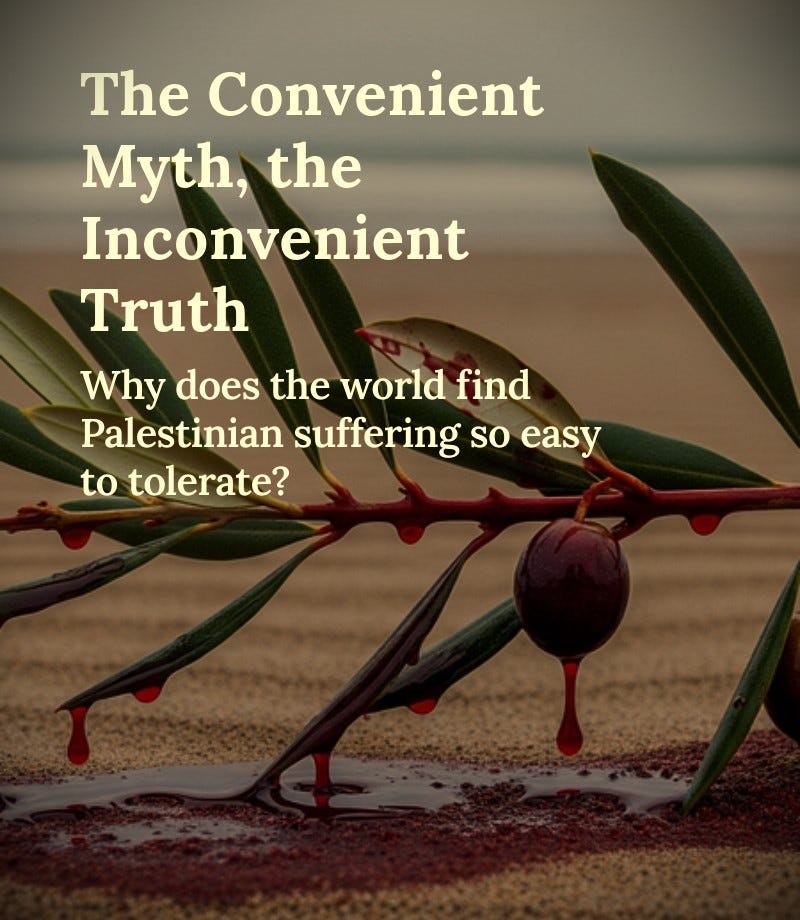
The Myth of the Lone Madman
A growing chorus of Western columnists now points its finger at Prime Minister Netanyahu. Thomas Friedman, in a recent New York Times column, went so far as to call the war “homicide, suicide, and fratricide,” claiming Netanyahu is dragging Israel into pariah status for the sake of his own political survival. That may carry a measure of truth—but only as a secondary effect.
The deeper truth is far more unsettling. By placing all the blame at Netanyahu’s feet, Friedman and others perform an act of moral convenience. They denounce the man while preserving the myth: that Israel as a state, as a project, and as a people remains fundamentally good but has been momentarily hijacked.
This is the firewall of liberal Zionism—criticize the government, not the system; condemn the leader, but never the ideology; quarrel with military decisions, but not with the legitimacy of permanent occupation.
The Blueprint of Occupation
Yet Gaza’s destruction long predates Netanyahu. The siege, the settlements, the dispossession of Palestinians, the erasure of their national aspirations—these have been bipartisan projects for decades. The Labor Party built the settlements. Kadima launched the 2008 assault on Gaza. Centrist figures spoke the language of peace while ensuring its impossibility. Israel’s Supreme Court upheld discriminatory laws and legalized the demolition of Palestinian homes. And the IDF does not operate on the whim of a single man—it acts because a broad national consensus grants it impunity.
Nor is this an Israeli project alone. The international community has never stopped the flow of resources. In the United States, millions of tax-exempt dollars are collected every year, funneled through charities, and used to build settler outposts, purchase confiscated land, and harden the infrastructure of dispossession. The same governments that mouth support for a two-state solution allow their own citizens to finance its burial.
What is happening in Gaza is not an accident, not a deviation, not a mistake. It is the consistent and predictable outcome of a system designed to preserve supremacy over a stateless and rightless population. The world is told to treat each atrocity as an aberration. But when bombardments recur, when sieges repeat, when dehumanization remains steady across decades, these cannot be dismissed as flaws. They are the blueprint itself.
Democracy’s Contradiction
Moderates hold fast to the fantasy that if Netanyahu were only gone, Israel would return to its “better self.” But Netanyahu was not an accident. He was chosen. He was elected, repeatedly, in democratic contests the West itself celebrates as proof of Israel’s legitimacy. His victories were not a hijacking but an alignment—between leadership and public will, between far-right coalitions and an electorate schooled in the normalcy of apartheid. Netanyahu never toppled democracy. He rode its contradictions to power.
To believe there was ever space for true Palestinian equality within the Zionist project is to cling to a founding myth. Dispossession and exclusion were not aberrations but blueprints. And as long as that fantasy endures, even the sharpest critiques will fall hollow.
No matter how many times the house burns, the blame will rest on the match, never the house built to burn.
The Outlier State
But the deeper contradiction goes beyond occupation or military policy. The insistence that Israel must remain a “Jewish state for the Jewish people” makes it an international outlier. In a world where modern nation-states are expected to serve all their citizens equally, regardless of faith or ethnicity, this principle has become increasingly hard to reconcile with universal norms. A state that defines itself foremost through ethnic or religious supremacy cannot credibly claim to embody liberal democracy. And yet, Western governments continue to celebrate Israel’s system as if it were fully consistent with democratic ideals—further shielding it from accountability.
The Inconvenient Truth
There is, however, an even more inconvenient truth. The suffering of Palestinians is not only excused because Israel is absolved. It is endured because of who the Palestinians are.
The Palestinians of Gaza are overwhelmingly Muslim. While faith alone does not define them, it has become the filter through which the West perceives them—flattened into a monolithic caricature. When the face of resistance is a veiled woman, or a man invoking jihad, the West does not see people demanding rights. It sees a threat.
This is not mere ignorance. It is fear. Centuries of Orientalism and colonization, reinforced by the securitized discourse of the post-9/11 era, have conditioned the Western imagination to conflate Islam with menace. Even when Palestinian resistance is nationalist, political, or rooted in international law, its Islamic identity invites projection. Once projected, suffering is not only easy to ignore—it is perversely rationalized.
A child standing in line for water amid the rubble is not seen as a victim but as the seed of future extremism. Bombed homes are dismissed when their inhabitants are cast as radicals. Mass displacement is excused when the displaced are imagined as enemies of “civilization” itself.
This is why Western leaders cling to the vocabulary of “counterterrorism” and “self-defense.” These phrases summon images of Islamic radicalism, transforming political realities into theological wars, theological fears into existential struggles. In that framing, Palestinians are not victims of war but adversaries of a world order.
Yes, there are radical strains within Muslim political life, and they must be confronted honestly. But acknowledging them cannot justify collective punishment, the bombing of neighborhoods, or the abandonment of children under rubble. To use their existence as a weapon is to erase a people’s claim to humanity altogether.
Myths That Enable Atrocity
So long as the world clings to both illusions—the lone madman in Tel Aviv and the dangerous Muslim in Gaza—Palestinian suffering will remain normalized. One myth excuses Israel. The other dehumanizes Palestinians. Together, they turn atrocity into policy.
Condemnation without sanctions, boycotts, or diplomatic rupture is not protest—it is theater.
Neutrality in the face of mass death is not principle. It is a moral failure.
As long as Netanyahu is treated as the exception, and Palestinians are imagined as the menace, atrocity will pass again as ordinary policy.
The world is not merely watching.
It is enabling.