


PolicyFlash – September 10, 2025
On September 10, 2025, conservative activist Charlie Kirk was shot and killed while speaking at Utah Valley University. The attack, carried out during his “American Comeback Tour,” turned a campus event into a crime scene and a nation into mourning. Across the political spectrum, leaders quickly condemned the assassination. There were prayers, promises of justice, and calls to reject violence.
The ritual is familiar. Today, we rush to denounce violence. Tomorrow, we go back to denouncing the people we disagree with—often with a ferocity that strips them of dignity or legitimacy. And in that cycle of denunciation, suspicion, and contempt, we feed the very conditions that make political violence possible, even predictable.
A Nation in Shock
The shooting at Utah Valley University is not an isolated tragedy. It follows a disturbing pattern: assassination attempts on political leaders, threats against judges, and violence at campaign events. America, once thought to be immune from the political assassinations that scarred other democracies, is now confronting the reality that rhetoric and resentment can all too easily become bloodshed.
Condemnation Without Change
In moments like this, the nation unites in grief. Republicans and Democrats alike issue statements rejecting violence. But unity rarely survives past the news cycle. By the next day, cable news and social media return to the familiar script—mocking, demonizing, and delegitimizing political opponents.
We are left with a paradox: bipartisan agreement that violence is unacceptable, coupled with bipartisan participation in the culture of contempt that fuels it.
The Normalization of Hostility
Violence doesn’t appear out of nowhere. It takes root in a soil already poisoned by language of exclusion and disdain. When every disagreement is framed as an existential threat, when opponents are branded as traitors, criminals, or enemies of the people, the line between argument and annihilation thins.
Political violence becomes thinkable because political opponents are no longer seen as neighbors but as enemies. The Kirk assassination is a brutal reminder of where that logic leads.
Breaking the Cycle
If we are serious about ending political violence, we cannot stop at condemning the gunman. We must also confront the ways we normalize hostility in everyday politics. That means resisting the temptation to humiliate those we disagree with, resisting the applause that comes from mocking an opponent, resisting the clickbait economy that rewards outrage over dialogue.
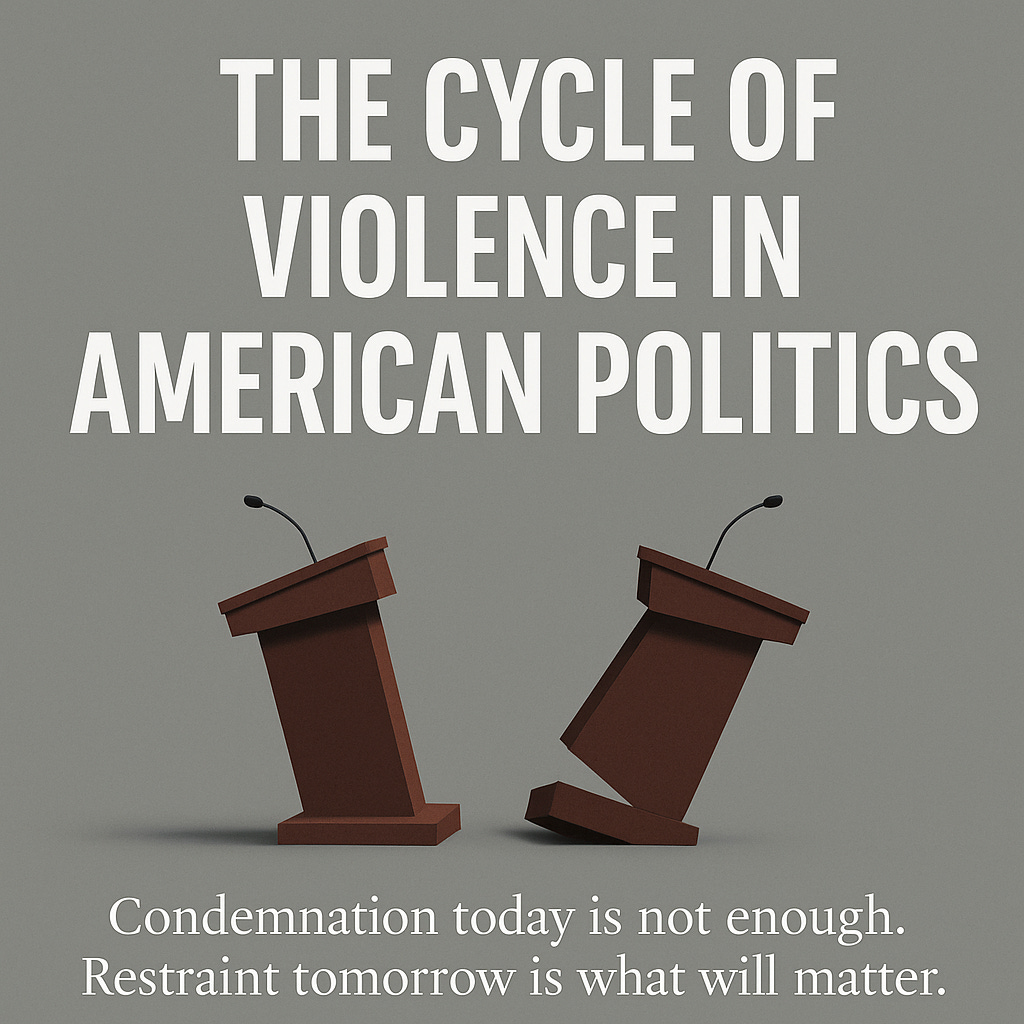
Condemnation today is not enough. Restraint tomorrow is what will matter.
A Call to Ethical Citizenship
Charlie Kirk’s assassination is a tragedy. But it is also a warning. The health of a democracy cannot be measured only by whether it survives its crises—it must be measured by whether it learns from them.
We do not have to agree with each other. We do not have to respect every idea. But we do have to preserve the belief that disagreement is not treason, and that opponents are not enemies to be destroyed. Otherwise, the cycle of violence will not break—it will only escalate.
In the end, democracy depends not on how loudly we denounce violence today, but on whether we can resist the urge to dehumanize each other tomorrow.