


Math vs. Melodrama: Why Washington Keeps Shutting Down
For the seventh day, parts of the federal government remain closed. Roughly 900,000 federal employees have been furloughed, and another 700,000 are working without pay. Essential services continue, but the nation is running on fumes, not policy.
We’ve seen this movie before. Every few years, Washington stages a shutdown as if the country needs a reminder of how broken its politics have become. But this time feels different. This time, the illusion has finally caught up with the arithmetic.
A Morality Play, Not a Math Lesson
For months, the headlines have been split: “The deficit is skyrocketing into the trillions!” followed by laments that any proposed cut, however small, is a moral failure. It’s deficit panic on Monday and purity theater on Tuesday—a choreography so predictable it almost deserves a copyright.
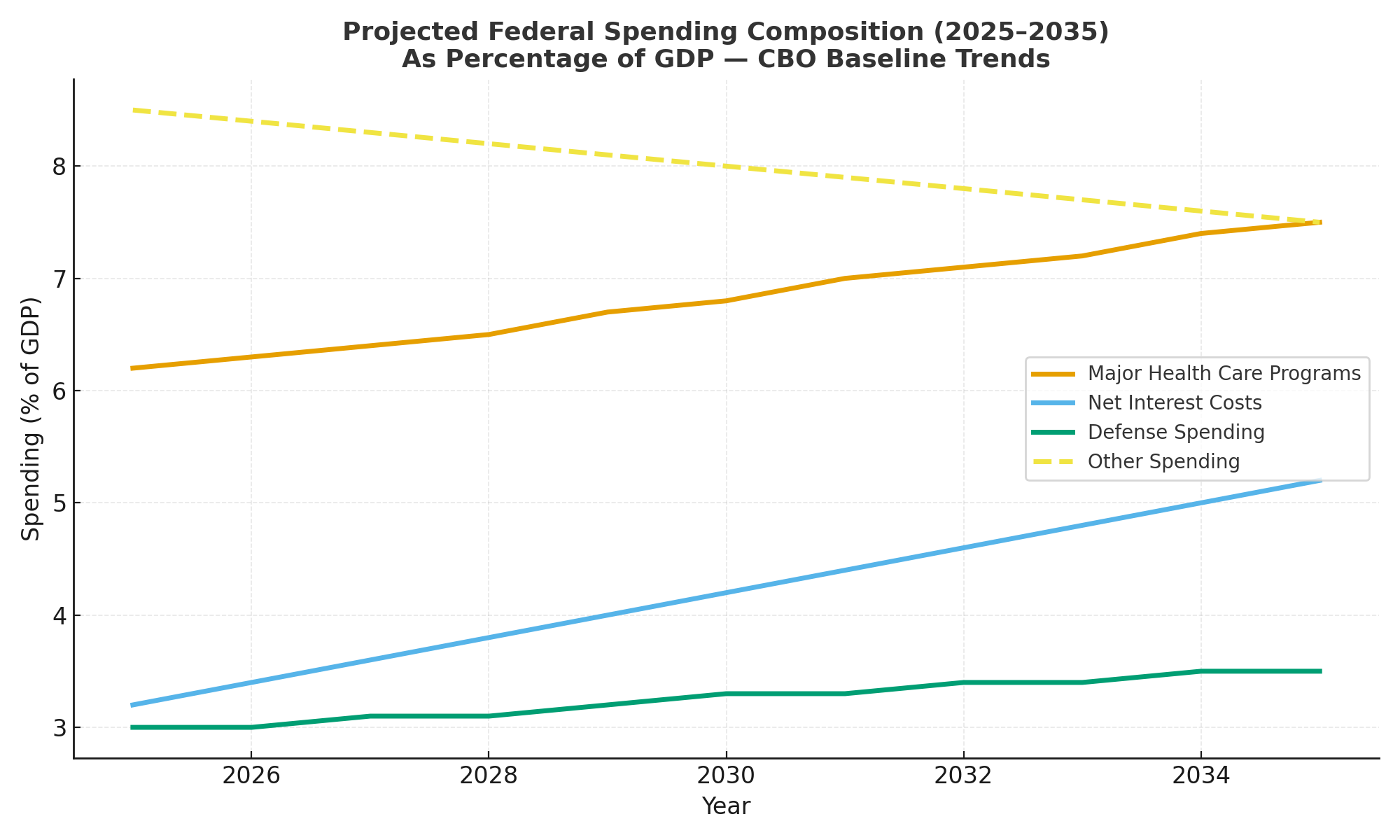
The math, though, doesn’t care. The federal government is nearly two trillion dollars in the red for this fiscal year. Spending exceeds revenue by $1.6 trillion. Interest payments have doubled since 2022 and are projected to top $1.8 trillion by 2035 — more than the defense budget itself. By then, debt will hover around 120 percent of GDP.
These are not obscure budget lines; they are warning lights on the national dashboard. Yet most Americans never see them because the people responsible for explaining them—politicians and media alike—prefer a morality play to a math lesson.
Turn on any major news outlet and the script is the same: politicians sparring over “values,” “fairness,” and “compassion.” The questions that matter—How much do we have? How much are we spending? How much do we owe?—are never asked. They don’t make for good television.
Conflict sells. Outrage keeps eyes on screens. And so we trade facts for feelings, arithmetic for emotion. Deficits become proof of heartlessness, spending becomes proof of virtue, and the actual numbers are left offstage—inconvenient and unmoving. Journalism turns into entertainment, and the public stays misinformed but emotionally engaged.
The Illusion of “Tax the Rich”
The illusion continues with the simplest slogan in American politics: “Tax the rich.”
It’s a comforting line, easy to chant and morally satisfying. The problem is, there aren’t enough billionaires to fund the government’s promises. Their wealth isn’t sitting in piles of cash waiting to be tapped; it lives in companies, stocks, and enterprises that employ millions and support the pension funds and 401(k)s of ordinary Americans.
Tax those assets too aggressively and you’re not just taxing “the rich.” You’re taxing your own retirement, your teacher’s pension, your neighbor’s savings. Even if the government confiscated a significant chunk of billionaire wealth, it would barely dent the structural gap between what we want and what we’re willing to pay for.
The problem isn’t greed. It’s the delusion that arithmetic can be ignored indefinitely.
Healthcare by Hostage Negotiation
Nowhere is that delusion clearer than in the debate that triggered this shutdown: health care.
America’s health-care system is an intricate, sprawling web—part public, part private, part patchwork improvisation. It’s also the single largest driver of both personal security and national cost, touching every family and every business. And yet, we treat it like a recurring afterthought—a bargaining chip tossed into last-minute negotiations.
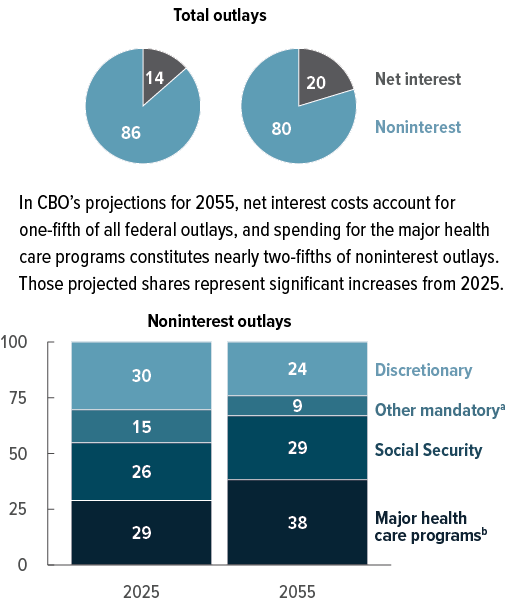
This year’s standoff centers on health-care subsidies. Democrats argue that the subsidies are essential to keep coverage affordable. The Congressional Budget Office warns that cutting them could raise premiums by up to 25 percent and leave roughly three million people without insurance. Republicans respond that the subsidies have morphed into an open-ended entitlement, expanding automatically without regard for budget limits. They point out that health-care spending already consumes about one-third of the federal budget.
Both arguments have merit. The real failure is that the debate happens only in crisis, not in planning.
It is both laughable and tragic that a system so vital is managed by midnight brinkmanship. A serious nation would have launched a bipartisan, five-year plan to reconcile compassion with cost and access with sustainability. Instead, we make policy by threatening to blow it all up.
The wealth of a nation is in its health. But no nation can stay wealthy, or healthy, when it treats policy like a hostage negotiation.
The result is what we see now: a government paralyzed by promises that can’t be paid for. Each week of shutdown costs an estimated $15 billion in GDP, $30 billion in lost consumer spending, and tens of thousands of jobs.
This isn’t fiscal discipline. It’s self-inflicted harm—the bill for years of pretending arithmetic doesn’t apply to compassion.
We keep electing politicians who sell dreams and illusions, then act shocked when those dreams collapse on contact with reality. They campaign in poetry and govern in denial. They promise everything, tax nothing, and borrow the rest.
But arithmetic is relentless. It doesn’t negotiate, doesn’t compromise, and doesn’t watch cable news. It just waits—and when the numbers stop adding up, it demands payment.
America isn’t short on empathy; it’s short on candor. Until leaders stop treating debt as an abstraction and voters start demanding math over melodrama, we’ll keep reliving this same crisis. The first step isn’t a grand bargain; it’s a simple demand from all of us: Show us the math.
Arithmetic always wins. The only question is how much pain we choose before admitting it.
A National Imperative
The time for slogans and brinkmanship is over. What’s needed now is a bipartisan national committee charged with designing a five-year, step-by-step plan to stabilize America’s health-care system — from funding to delivery, from access to accountability.
This isn’t a talking point or a partisan trophy. It’s existential. Health care is not just another line in the budget; it’s the foundation of the nation’s human capital, its productivity, and its moral integrity. Without a coherent, long-range strategy that both parties own, the United States will keep managing its most vital public good by emergency vote and midnight threat.
The wealth of a nation is in its health — and the time to prove we understand that is now.